The Arkansas Trav'ler
Pitmaster Gazette · Championship BBQ Edition
How-To Guide
Short answer to what temperature to smoke ribs: 225°F is the championship standard. 250°F is fine. 275°F will work if you know what you’re doing and you’re short on time. Anything under 200°F is a problem, and anything over 300°F is grilling, not smoking.
Long answer: the temperature you pick decides how long the cook takes, how the bark develops, how tender the meat gets, and how forgiving the whole process is. Pitmasters argue about this forever because there are real trade-offs at each temperature. Here’s what actually happens at each setting, why low and slow is the championship method, and how to fix things if you realize you’ve been running hot for two hours.
Why low and slow works: the collagen explanation
Pork ribs are tough. The muscles they come from — the intercostals along the ribcage — are the muscles that let a hog breathe, and they’re packed with connective tissue, mostly collagen. Raw collagen is chewy. Cooked collagen is chewy. Collagen that’s been held at low heat for a long time breaks down into gelatin, which is what makes ribs tender.
Collagen breakdown happens in a very specific window:
- Below 160°F: Nothing much happens. Collagen stays intact.
- 160-180°F: Collagen starts to slowly break down.
- 180-203°F: This is the sweet spot. Collagen converts to gelatin steadily.
- Above 210°F: Meat starts to dry out and texture gets mushy.
The key word is slowly. Collagen doesn’t break down instantly at 180°F — it takes hours. If you blast ribs at 350°F, the internal temperature races through that 180-203°F window in 30 minutes, and you haven’t given the collagen time to convert. The meat comes out tough no matter what the probe says.
That’s why you cook low — so the meat spends hours in the collagen-breakdown window instead of minutes. At 225°F chamber temperature, a rack of spare ribs spends roughly 2-3 hours in the 180-200°F internal window. That’s why they come out tender.
225°F: the championship standard
This is the temperature Jim Quessenberry cooked at in the 1970s and ’80s. It’s the temperature that produces the best balance of:
- Tender meat (long collagen breakdown window)
- Great bark (slow Maillard reaction and dehydration)
- Maximum smoke absorption (meat holds smoke best before 140°F internal, which takes ~2 hours at 225°F)
- Forgiveness — a 30-minute mistake at 225°F is not a disaster
Typical total cook time at 225°F:
- Baby back ribs: 4-5 hours
- St. Louis-cut spare ribs: 5-6 hours
- Full untrimmed spare ribs: 6-7 hours
This is where we start and where we finish. If you have a whole Saturday, cook at 225°F. No need to overthink it.
Full step-by-step method: How to Smoke Ribs.
250°F: the “I’ve got less time” temperature
250°F is a perfectly respectable rib temperature. You’ll cut about an hour off your total cook time and you’ll still get tender ribs and good bark. The trade-offs:
- Less time in the smoke ring window (meat holds smoke below 140°F internal)
- Faster bark development — which can be good or bad. Good because you get there faster, bad because the bark can get ahead of the meat being done.
- Slightly firmer texture because collagen has less time to break down
Typical cook time at 250°F:
- Baby back ribs: 3.5-4 hours
- St. Louis-cut: 4.5-5 hours
Use 250°F when you fired up the smoker late, or when your smoker runs hot naturally and you’re tired of fighting it. The ribs will be great. Just slightly different.
275°F: the “hot and fast” method
Hot and fast rib cooking is a legitimate technique. Some competition pitmasters cook at 275-285°F because they’ve learned to manage the faster timeline and they like the thicker bark that higher heat builds. The trade-offs:
- Much less forgiveness — a 20-minute mistake here can overcook a rack
- Smaller smoke ring — less time in the smoke-absorption window
- Denser bark — can be great, can be too hard if you overshoot
- Need to watch closely — no walking away
Typical cook time at 275°F:
- Baby back ribs: 2.5-3 hours
- St. Louis-cut: 3.5-4 hours
We don’t recommend this for a first-time rib cook. It’s great once you know your smoker well enough that you can read the ribs by eye and touch. If you’re still using a thermometer for every decision, stay at 225°F.
Below 200°F: the “oops my smoker is cold” problem
If your smoker is drifting around 180-200°F, you’ve got a fuel problem. Maybe the fire died down, maybe you didn’t get enough airflow, maybe it’s a cold day and the chamber isn’t holding heat. Either way, ribs cooking at those temperatures are not getting proper smoke (the wood isn’t combusting cleanly), they’re spending forever in the danger zone, and the bark is going to be soggy.
Fix it. Get the temperature back up to at least 220°F before you do anything else. Add fuel, open the vents, check for restriction in the chimney. Don’t just hope it sorts itself out.
Above 300°F: that’s grilling, not smoking
At 300°F and up, two things go wrong for ribs:
- The rub sugar starts to burn before the collagen has broken down
- The exterior overcooks and dries out while the interior is still raw
You can cook ribs at high heat, but you’re not smoking anymore — you’re grilling. That’s a different recipe, different technique, different expectations. Don’t confuse the two.
Time vs temperature: the trade-off table
| Temp | Time (St. Louis ribs) | Bark | Tenderness | Difficulty |
|---|---|---|---|---|
| 225°F | 5-6 hours | Excellent | Excellent | Easy |
| 250°F | 4.5-5 hours | Very good | Very good | Easy |
| 275°F | 3.5-4 hours | Good but variable | Good | Medium |
| 300°F+ | 2-3 hours | Risk of burning | Inconsistent | Hard |
How to recover if you cooked too hot
It happens to everyone. You put the ribs on, walked inside for 20 minutes, came back and the smoker was running at 310°F. Here’s what to do:
-
Bring the temperature down immediately. Close the intake vent partially. If you’re running a stick burner, let the fire die down before adding more wood. If it’s a pellet grill, drop the setpoint.
-
Check the ribs. Look for burning on the edges. Sniff for bitter/acrid smoke. If the ribs look fine, proceed.
-
Skip directly to the foil wrap. If you’re doing the 3-2-1 method, you can move to the foil phase earlier than planned. The foil will stop the bark from over-forming and let the meat catch up.
-
Check internal temperature. Probe between the bones. If you’re under 170°F, you still have time. If you’re already over 200°F, move to the sauce phase now and pull them early.
-
Don’t panic-sauce. It’s tempting to slather sauce on to “hide” problems. Don’t. Sauce burns at high heat. Wait until you’ve got temperature under control.
Internal temperatures to look for
Chamber temperature is what you dial in on the smoker. Internal temperature is what the meat actually reads. They’re not the same thing and internal temperature is what matters for doneness.
- 140°F internal: The meat stops absorbing smoke. After this, wood just adds bitterness.
- 160°F internal: You’re entering the stall — where the temperature stops climbing because evaporation is cooling the surface. This is when to foil (if you’re foiling).
- 190°F internal: Collagen is mostly broken down. Ribs are getting tender.
- 195-205°F internal: Done. The exact number depends on the specific rack, but this is the window.
More important than any thermometer reading is the bend test: pick the rack up with tongs in the middle. If the bark cracks on top and the rack bends easily, they’re done. If it’s stiff, keep cooking. No thermometer is as accurate as what your eyes and hands tell you.
Putting it together
For your first 10 rib cooks, do this:
- Run your smoker at 225°F the whole time
- Use a wood with a clean flavor — hickory, apple, pecan
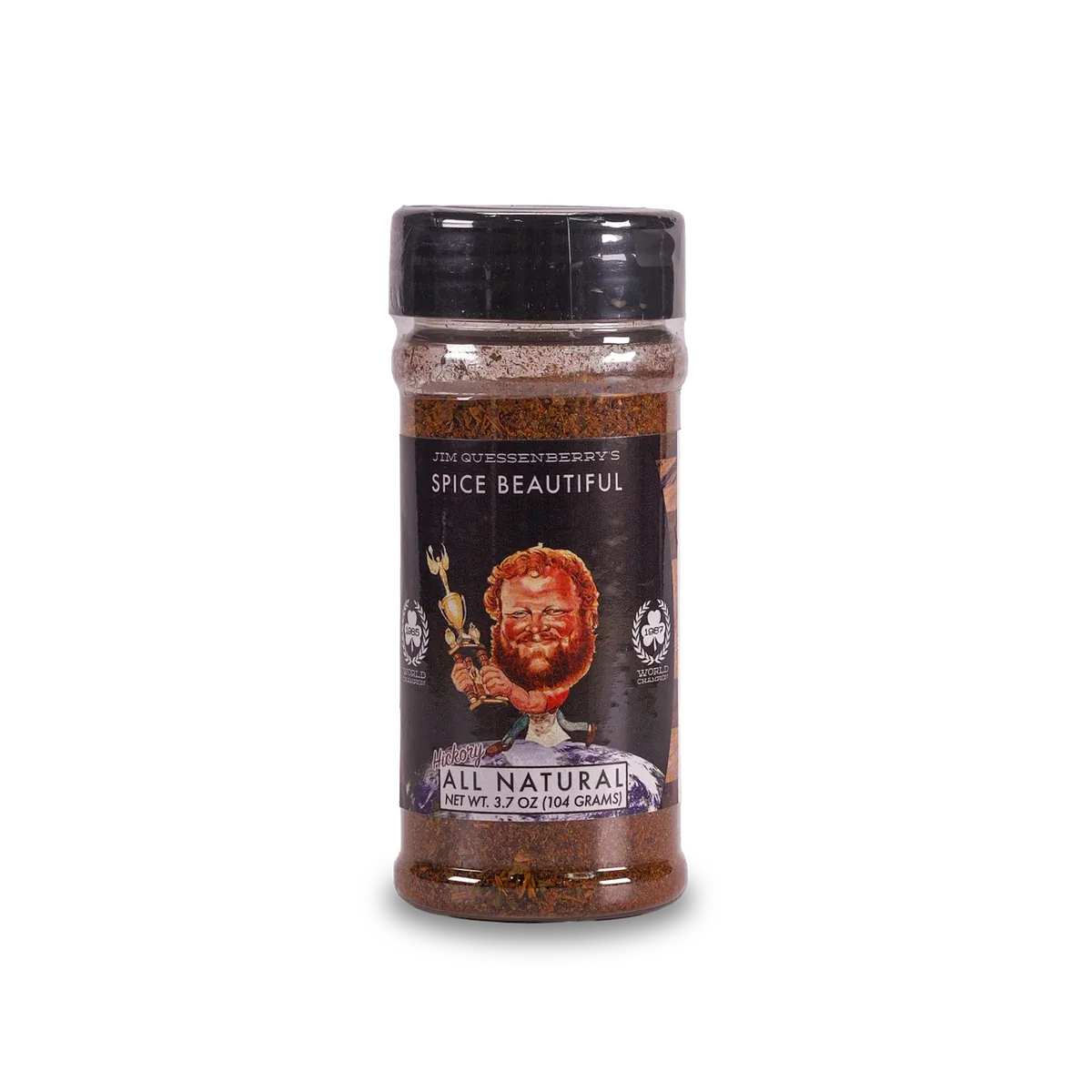
- Apply Spice Beautiful Hickory 30 minutes before the cook
- Cook for 5-6 hours, spritzing every 45 minutes after the first 90 minutes
- Brush with Sauce Beautiful Original in the last 30 minutes
- Check doneness by bend test, not clock
Once that feels easy, start experimenting. Try 250°F. Try hot and fast at 275°F. Try different woods. That’s how you learn what a rib cooked at each temperature actually feels like.
The bottom line
Cook at 225°F until you know what you’re doing. Then break the rules if you want to. Jim Quessenberry used to say ribs don’t care about your schedule — they care about the clock on the meat. A rack of ribs finishes when it finishes. The smoker temperature just decides when that is.
Cook those ribs. We’ll eat ‘em.
— End of dispatch · Shipped by Jim's sons —