The Arkansas Trav'ler
Pitmaster Gazette · Championship BBQ Edition
How-To Guide
A great bbq rub for pulled pork doesn’t just season the surface of a pork shoulder — it builds the bark, flavors the juice that pools in the meat during the cook, and becomes part of every pulled bite an hour later. Get the rub right and everything downstream is easier. Get it wrong and there’s nothing you can do in the last hour to save it.
This is how Jim Quessenberry taught his sons to rub a pork shoulder, and how we still do it in Arkansas before every cook.
What makes a great pulled pork rub different from a rib rub
Pork shoulder and pork ribs look like the same animal, but they cook completely differently — and they need different rubs.
Ribs are thin. They have a lot of surface area relative to the meat. The rub becomes most of what you taste. Ribs cook for 5-6 hours, so the rub doesn’t have a ton of time to break down.
Pork shoulder is a fist of meat. It’s thick, it’s fatty, and it cooks for 12-16 hours at low temperature. The rub on a pork shoulder has to survive all that time, melt into the rendering fat, flavor the juice that leaks out, and still be recognizable on the surface at the end.
That means a pulled pork rub needs:
- More salt than a rib rub (it has further to penetrate)
- More sugar (it has longer to build bark)
- Less cayenne (cayenne intensifies over long cooks and can get overwhelming)
- More savory depth — garlic, onion, paprika — because you want flavor in every bite of pulled meat, not just on the crust
- Coarser grind — a coarse rub holds up through the long cook; fine powders can wash away as the fat renders
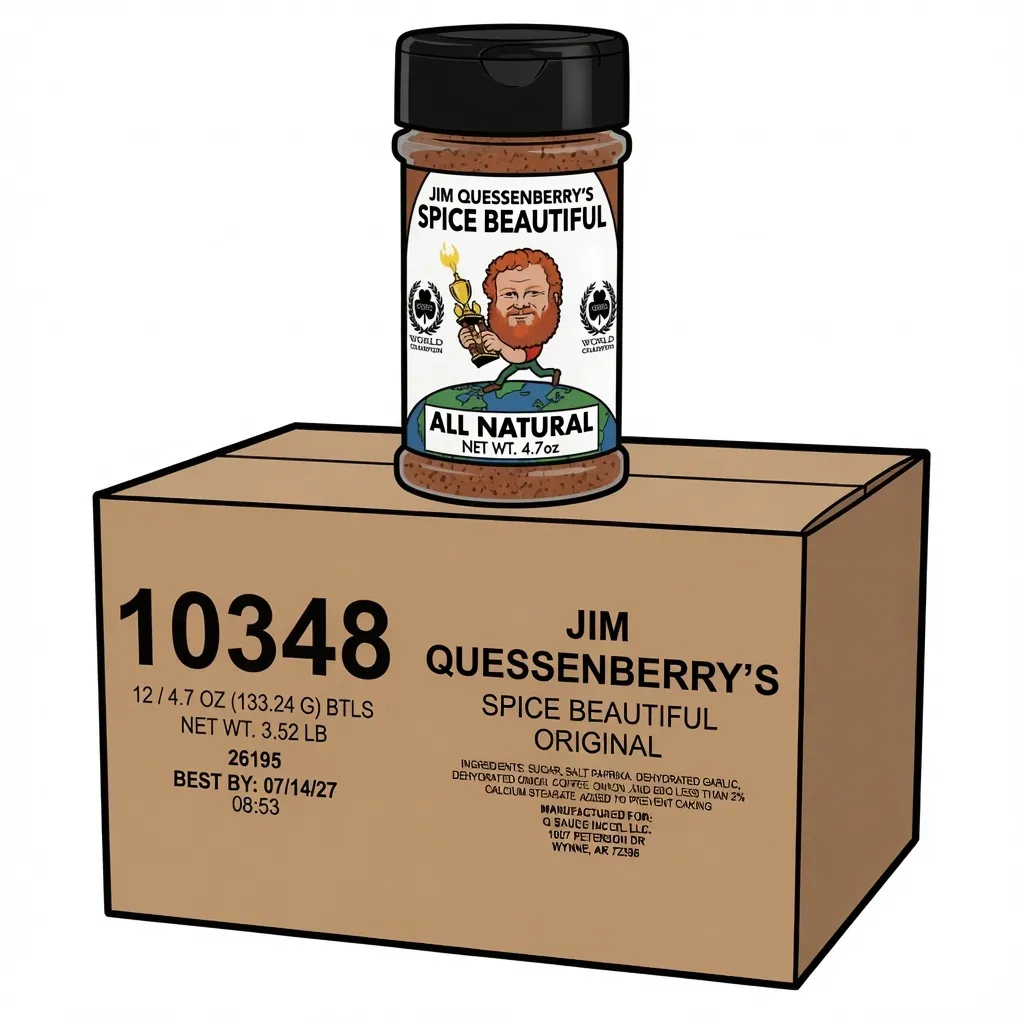
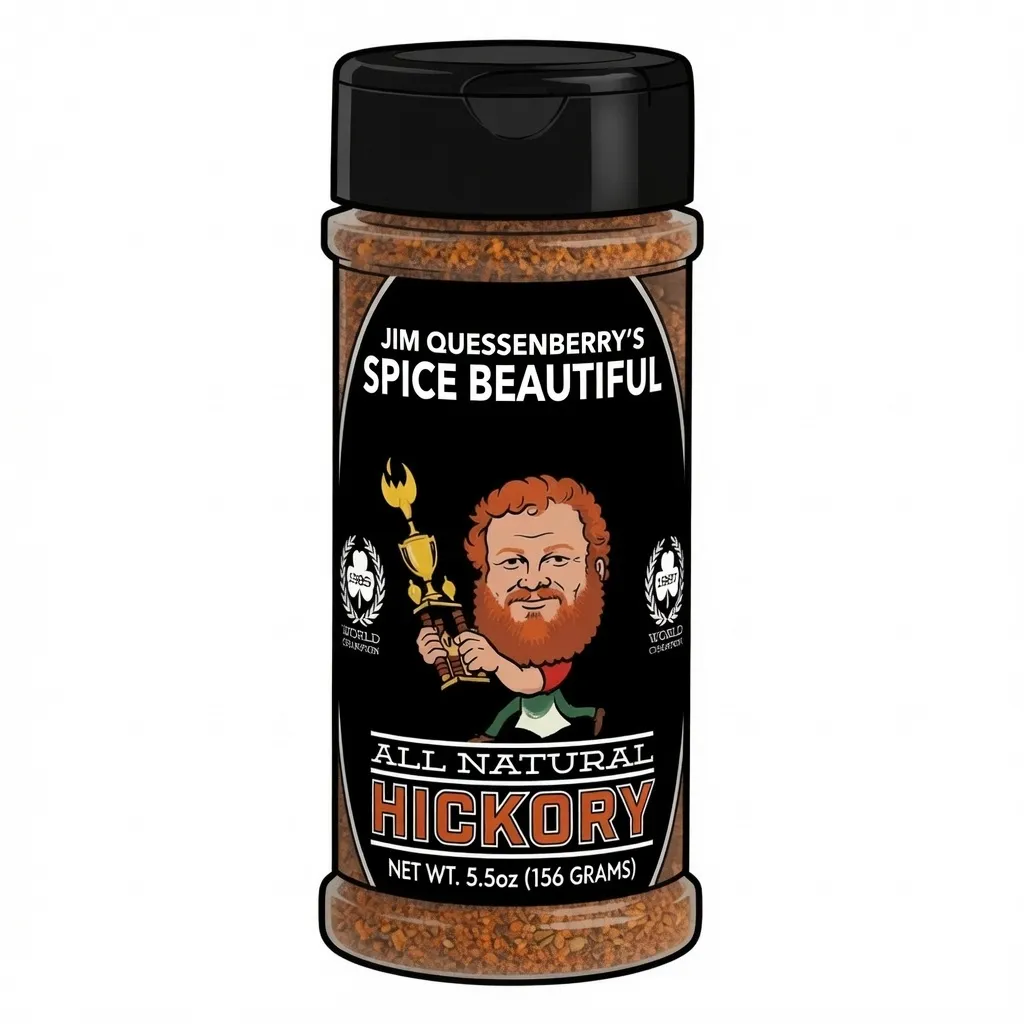
A rub built for ribs will work on a pork shoulder in a pinch, but it won’t be optimized. Spice Beautiful Original is our all-purpose championship rub that leans pulled-pork friendly; Spice Beautiful Hickory is the rib-forward version. For a pork shoulder, we’d grab Original first — it’s got the savory backbone pulled pork needs.
The science of bark formation on pork shoulder
The bark is the single most important thing about pulled pork. It’s the dark, almost-black, crusty exterior that forms during a long smoke — it’s where the flavor concentrates, where the smoke lives, and where the texture contrast comes from.
Here’s what actually happens during the 12-hour cook:
-
Hours 0-3: The rub dissolves into the surface moisture of the meat and forms a paste. The paste starts dehydrating as the meat warms up. Smoke begins depositing on the wet surface.
-
Hours 3-8: The surface proteins start denaturing and the Maillard reaction kicks in — that’s the browning reaction responsible for everything from seared steak to toasted bread. Sugar in the rub caramelizes. Smoke particles bond to the tacky surface. The meat enters “the stall” — the long flat zone where the internal temp stalls around 160-170°F because moisture is evaporating off the surface as fast as the cook is heating it.
-
Hours 8-12: The bark sets. Fat renders from inside the shoulder and bastes the surface. The bark gets darker, crustier, deeper in flavor. Internal temp climbs toward 203°F where collagen breaks down into gelatin.
-
Rest: When you pull the shoulder off the smoker and let it rest, the bark firms up and the juices redistribute.
A rub with enough salt, sugar, and paprika — the three non-negotiables — will feed that whole process. A rub without enough sugar makes thin, weak bark. A rub without enough salt makes bark that tastes flat. A rub without paprika makes bark that looks washed-out instead of that dark red-black color everyone wants.
How much rub to use on a pork shoulder
For an 8-pound pork shoulder (also called a Boston butt), you want roughly 1/2 cup of rub total — about 1/4 cup per side.
That sounds like a lot. It is. Pork shoulder can take it. You want the surface completely coated, with no bare spots of meat showing through. If you shake the shoulder and rub falls off, you used too much. If you see gray meat anywhere, you used too little.
Apply from about 10 inches above the meat — sprinkle, don’t dump. This gives you an even distribution. Cover the top, flip, cover the bottom, cover the sides. Don’t forget the sides.
When to apply the rub (the overnight rest debate)
This is the one decision that divides more pitmasters than any other.
Option 1: Rub and rest overnight. Apply the rub, wrap the shoulder in plastic or put it in a covered tray, and refrigerate for 8-24 hours before cooking. The salt in the rub draws moisture out of the meat, which then dissolves the rest of the rub and gets reabsorbed. This is the same principle as a dry brine. You get better penetration, more seasoned meat all the way through, and a rub that’s already bonded to the surface when you put it on the smoker.
Option 2: Rub and go. Apply the rub at room temp 30-60 minutes before the cook. The rub sits on top, bonds to the surface moisture, and starts forming bark right away. You get a more pronounced bark and a clearer “rub layer” on the exterior, but less seasoning in the interior meat.
Our take: For pork shoulder, rest overnight. Pork shoulder is a big piece of meat and it benefits hugely from deep seasoning. The 12-hour cook gives you plenty of time to build bark regardless. Rest it, get better flavor all the way through, and you’ll taste the difference in every pulled bite.
For ribs, the argument flips — ribs are thinner and benefit from a fresher rub layer. See our rib guide for that side of the discussion.
The binder question
A binder is a thin layer — mustard, oil, mayonnaise, even hot sauce — that you spread on the meat before applying the rub. Its only job is to help the rub stick.
You will not taste the binder. It’s a tablespoon of mustard on eight pounds of meat that’s going to cook for 12 hours. It disappears completely.
But it does make a difference in coverage. Dry pork shoulder has slick spots where the rub won’t grab. A thin mustard binder fixes that.
Yellow mustard is the classic choice — cheap, available, flavor-neutral once it cooks. Olive oil works but can cause some flareups if you’re on a hot zone. Mayonnaise is popular lately — the eggs and oil help build a richer crust. Hot sauce works if you want a tiny bit of extra bite.
For pulled pork, we use yellow mustard. Jim did, his sons do, we’re not about to change it.
Common mistakes that ruin pulled pork before the cook starts
-
Not drying the meat first. If the shoulder is wet when you rub it, the rub clumps. Pat it dry with paper towels, then apply the binder, then rub.
-
Using too little rub. Pork shoulder is thick. Be generous. A light dusting is for chicken.
-
Using too much salt. If your rub already has salt in it (most do), don’t add extra. Double-salting is the most common rub mistake.
-
Rubbing cold meat straight from the fridge. Let the shoulder come up to room temp for 30 minutes before applying the rub so the surface isn’t sweating.
-
Applying sauce as a binder. Sauce has sugar in it, and sugar pre-applied to a long cook burns. Save the sauce for the finish or for the pulled meat.
-
Not covering the sides. The sides of a pork shoulder render a lot of fat and the rub there flavors the juice. Hit all six sides, not just the top and bottom.
-
Rubbing and then injecting. If you’re going to inject the shoulder, inject first, then dry, then rub. Injecting after the rub washes the rub off.
What to do after the cook
When the shoulder hits 203°F internal and passes the probe test (a thermometer slides in like soft butter), pull it off the smoker, wrap it in foil, and let it rest in a dry cooler for at least an hour. Two is better.
Then pull it apart by hand, mix the bark into the pulled meat (do not throw away the bark — that’s the best part), and serve with Sauce Beautiful Original on the side, not mixed in. Let each person sauce to taste.
For the full smoking method — temperatures, wood choice, timing — see our rib guide — most of the same principles apply to pork shoulder, just stretched over a longer cook.
What you need
- Spice Beautiful Original — our championship all-purpose rub, tuned for pork shoulder
- Sauce Beautiful Original — the finishing sauce
- Pick 3 Combo — rub, sauce, and one more bottle at a better price
Cook that sumbitch. We’ll eat it.
— End of dispatch · Shipped by Jim's sons —