The Arkansas Trav'ler
Pitmaster Gazette · Championship BBQ Edition
Product Guide
“Best” is a loaded word in BBQ. There isn’t a single best BBQ rub because different rubs are built for different meats, different cooks, different flavor preferences, and different traditions. A rub that’s perfect on competition ribs might be wrong for a Texas brisket. A rub that’s perfect for chicken would be strange on a pork shoulder.
What we can talk about honestly is: what makes a rub great, what to look for on the label, the small-batch pitmaster brands making genuinely excellent rubs right now, and which rub is the right call for what you’re cooking. This isn’t a ranked listicle — it’s a pitmaster’s honest read on the market.
What makes a rub “best”
A great BBQ rub does four things at once:
- Seasons the meat properly — enough salt to penetrate, evenly distributed across the surface
- Builds bark — enough sugar to caramelize, enough paprika for color, enough texture to form a crust
- Layers flavor — warm spices, savory notes, a little heat, maybe some herbs or regional twists
- Stays consistent — the batch you buy in January should taste the same as the batch you buy in July
That last one sounds boring but it matters. A rub that varies wildly from jar to jar makes it impossible to cook to a standard. The best small-batch rubs are made by pitmasters who care enough to source the same spices every batch and measure by weight, not volume, so the flavor is reliable.
A great rub also has a clear philosophy. It’s built for something specific. “All-purpose seasoning” rubs are usually mediocre at everything because they’re trying to work for steak, chicken, pork, fish, and vegetables all at once. The best BBQ rubs are built for a specific cooking style — ribs, pork shoulder, brisket, competition chicken — and they lean into that purpose.
What to look for on a rub label
Pick up a jar of BBQ rub at the store and flip it over. Here’s what to scan for:
Good signs
- Real spices listed by name — paprika, kosher salt, brown sugar, garlic powder, black pepper, cumin, chili powder, mustard powder, cayenne. These are the bones of any good rub.
- A pitmaster story or family recipe on the label — not conclusive, but good rubs usually have humans behind them
- Reasonable sodium content per serving (500-1200mg per teaspoon is typical for a BBQ rub)
- No caking agents like silicon dioxide or dextrose if it can be avoided (they’re fine, but premium rubs usually skip them)
- Date code or batch number — shows the maker cares about freshness
Warning signs
- “Natural flavors” as a main ingredient — can be a catch-all for lower-quality flavor compounds
- Sugar listed as the first ingredient at a level that’s disproportionately high — can mean the rub is hiding weaker spices behind sweetness
- MSG or “disodium inosinate/guanylate” — not inherently bad, but usually a sign of industrial formulation
- No salt on the ingredient list at all — means you’ll have to salt separately, which defeats the purpose of a rub
- Very long shelf-life preservatives — rubs should be fresh; a 5-year shelf life claim is suspect
None of these are deal-breakers on their own. But when you see multiple warning signs on the same label, you’re probably looking at an industrial rub built for cost, not flavor.
The small-batch brands making genuinely great rubs
Here’s an honest rundown of the pitmaster-run, small-batch rub brands worth your time. We’re leaving off the grocery store brands (McCormick, Weber, Kingsford) because those are fine but not what we’d recommend if you care enough to be reading this. Every brand on this list is doing good work. Rankings would be silly — they all win on different meats.
Heath Riles BBQ
Heath Riles is a well-known competition pitmaster with a respected track record on the KCBS circuit. His rub line is one of the most respected on the competition circuit. The Everyday Rub is a killer all-purpose pork and chicken rub; the Honey Rub is built for ribs and adds a dedicated sweet-glazed finishing layer. If you’re cooking competition-style BBQ, Heath Riles is one of the first names you should know.
Meat Church
Meat Church’s Holy Gospel (all-purpose) and Honey Hog (sweet) are some of the most widely used competition rubs of the last decade. Matt Pittman built Meat Church from a backyard operation into a major brand without losing the pitmaster feel. Good stuff across the line. The Gospel rub is the one most people start with.
Killer Hogs (Malcom Reed)
Malcom Reed — who runs the How to BBQ Right YouTube channel and the Killer Hogs competition team — makes The BBQ Rub, The AP Rub, and The Hot BBQ Rub among others. All excellent. Killer Hogs AP is one of the most versatile rubs on the market — salt-pepper-garlic-based with just enough depth to work on anything.
Kosmo’s Q
Darian Kosmal’s rub line is massive at this point — dozens of flavors ranging from traditional BBQ to wild experiments like Cow Cover (brisket) and Dirty Bird (chicken). The Texas Beef rub is a legitimate competition brisket option. Kosmo’s leans competition-focused and the flavors can be intense — not everyone’s everyday rub, but impressive at what they do.
Plowboys BBQ
The Yardbird rub is one of the best chicken rubs you can buy, period. Plowboys BBQ has a strong track record on the competition circuit, and Yardbird has been used by winning competition teams. The operation is smaller than Meat Church or Killer Hogs but the quality is there.
Oakridge BBQ
Mike Trump’s rubs are a step toward the more artisanal/complex end of the market. Secret Weapon (chicken and pork) and Black Ops (brisket) are both excellent, and Oakridge makes some of the most carefully-sourced rubs in the game — fresh spices, measured by weight, small batches.
Pit Barrel Cooker
If you own a Pit Barrel Cooker, their house rub is genuinely good — a simple, balanced, all-purpose rub that works on everything that goes in the barrel. It’s not just an afterthought product.
Lillie’s Q
Charlie McKenna’s Lillie’s Q line — more known for sauces than rubs — also makes a solid Carolina Dirt rub built for pulled pork. Worth knowing about if you want a specifically Carolina-leaning rub.
And ours: Spice Beautiful
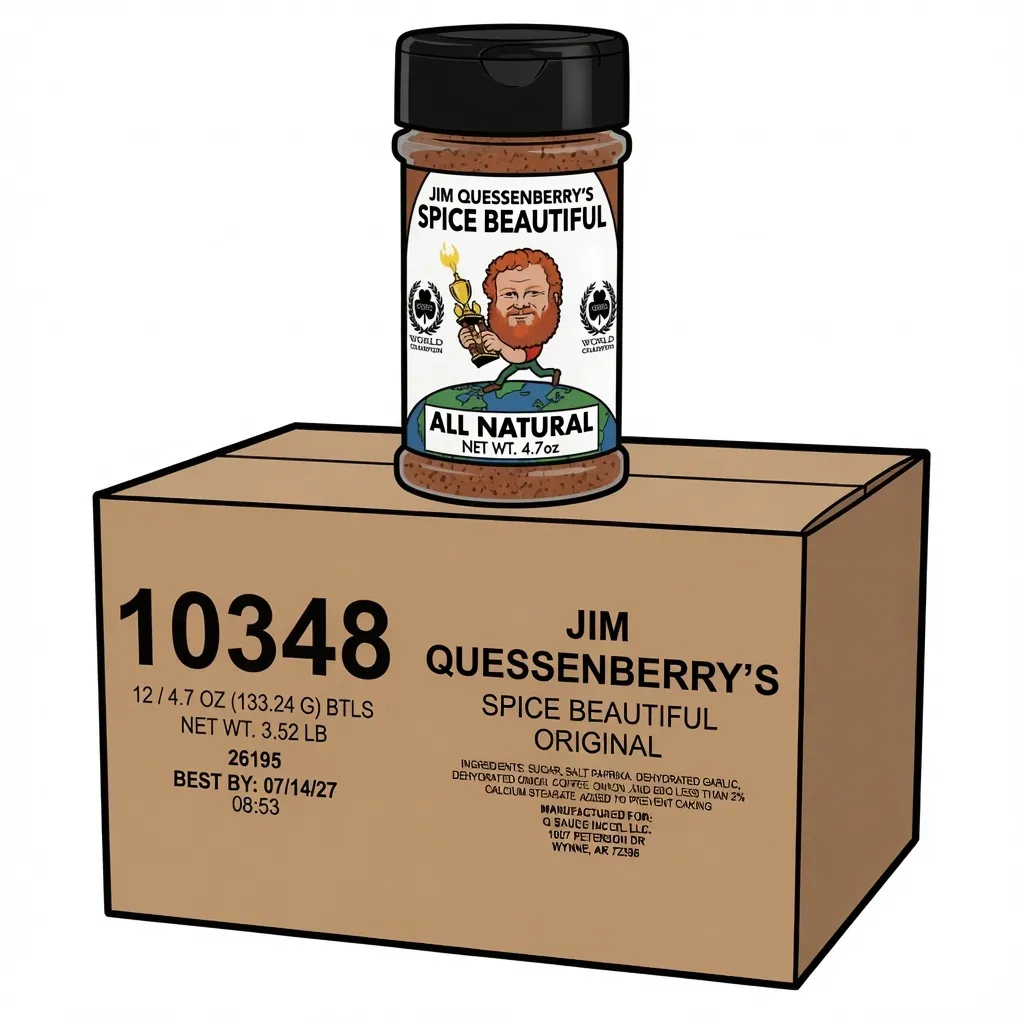
Spice Beautiful — the original, also called Rub Beautiful — is the all-purpose championship rub in a shaker. It is Jim Quessenberry’s original 1980s formula. It’s built for pork shoulder, chicken, and ribs, with a balanced profile that sits between the Memphis and Kansas City traditions. Salt-forward, paprika-rich, brown-sugar balanced, with a warm spice backbone and a little bite. Works on everything.
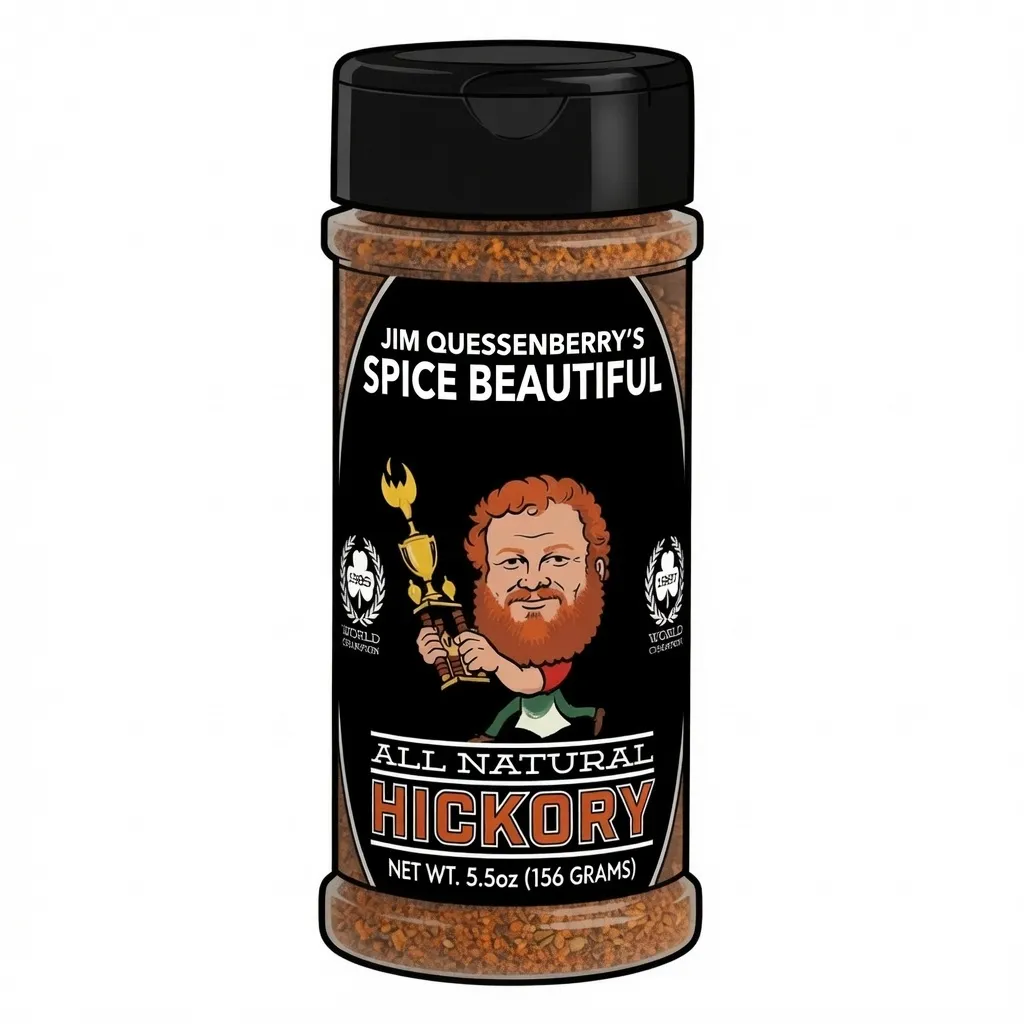
Spice Beautiful Hickory — the hickory rub, also called the steak rub — is the rib-specific rub in a shaker. Same structure, with a hickory-forward profile tuned for pork ribs. More pepper, slightly less sugar, a touch of smoked paprika. This is the rub we’d use on a rack of competition-quality St. Louis-cut ribs.
The recipes haven’t changed since Jim made them in the 1980s. Every product is shipped directly by Jim’s sons. If you want a rub from a championship pitmaster family that actually won championships, that’s us.
Which rub for what meat
Here’s how we’d match up rubs to meats if we were building a pitmaster kit from scratch:
| Meat | First pick | Alt pick |
|---|---|---|
| Pork shoulder / pulled pork | Spice Beautiful Original, Meat Church Honey Hog | Killer Hogs The BBQ Rub |
| Pork ribs | Spice Beautiful Hickory, Heath Riles Honey | Meat Church Honey Hog |
| Brisket | Killer Hogs AP, Oakridge Black Ops | A homemade Dalmatian (50/50 salt + coarse pepper) |
| Chicken (whole or parts) | Plowboys Yardbird, Spice Beautiful Original | Heath Riles Everyday |
| Turkey | Meat Church Holy Voodoo, Spice Beautiful Original | Plowboys Yardbird |
| Beef (other than brisket) | Oakridge Black Ops, Kosmo’s Texas Beef | Killer Hogs Steakhouse |
This is not a definitive list. Other pitmasters would pick differently. But these are all honest recommendations based on what works.
The case for Spice Beautiful
If you’re choosing between rubs and you want to know why ours is worth a side-by-side:
-
Championship pedigree you can verify. Jim Quessenberry was an Irish Cup champion in County Clare — Fanore 1985 and Lisdoonvarna 1987. Not a marketing claim — a historical fact. The rub you’re buying is his actual formula.
-
Shipped by the family. Every product is shipped directly by Jim’s sons. The rubs come in shakers: Spice Beautiful is the original (also called Rub Beautiful), and Spice Beautiful Hickory is the hickory rub (also called the steak rub).
-
A pork-leaning profile that works for Arkansas-style cooking. If you’re cooking pork shoulder, chicken, and ribs (the big three of backyard BBQ), this rub is calibrated for exactly that.
-
No gimmicks. We don’t add MSG, we don’t use silicon dioxide, we don’t claim “all-natural” and then hide behind natural flavors. The ingredient list is the ingredient list.
-
Fair price for what it is. Spice Beautiful costs less than some boutique rubs and more than grocery store rubs.
The best “best BBQ rub” is the one you actually use
Here’s the honest pitmaster truth: the best rub is the one sitting in your cabinet when you’re ready to cook. If you buy six different brands and they sit on the shelf because you can’t decide which to use, none of them is doing you any good.
Pick one that fits what you cook most often. Use it for a month. If you love it, keep buying it. If something about it bothers you, try another brand. That’s how every pitmaster we know ends up with their regular rub — not by reading reviews but by cooking.
For us, that rub is Spice Beautiful — the original, in a shaker — for pork shoulder and chicken, and Spice Beautiful Hickory — the hickory rub, in a shaker — for ribs. Biased, yes. Also honest. It’s the rub our dad built, and it’s the one we reach for when we’re cooking for our own families.
If you want to build your own from scratch to see how the ratios work, we’ve got a championship BBQ rub recipe you can make at home.
Cook that sumbitch. We’ll eat it.
— End of dispatch · Shipped by Jim's sons —